Make sure to stop by and 'Like' our new Facebook page! Just search 'The Civil Pantry' or follow the link below:
Wednesday, August 29, 2012

Tuesday, August 14, 2012
Some hope and change for the farmers please?
 |
| Journal Sentinel Online, "Reform? Haven't seen it in these versions of farm bill" |
Thursday, August 9, 2012
Replenish Electrolytes Naturally
 |
| Click for complete Food Babe Article |
- Juice Celery + Apple + Lemon - This juice combination works wonders for replacement of electrolytes. The celery has a natural source of sodium, potassium, magnesium, chloride, and phosphorus. Apple provides additional potassium and natural sweetness. Lemon is the highest electrolyte containing citrus fruit.
- Stir Sea Salt + Baking Soda + Lemon Juice + Maple Syrup into 8 ounces of Water – This is a great natural remedy for serious endurance athletes – You might think drinking baking soda is a little weird, but it’s been used for centuries to treat various aliments. In this case, it’s added to the mix because it makes the body less acidic and provides an additional source of sodium bicarbonate.
- Shake Raw Coconut Water + Chia Seeds - Raw coconut water has a ton of electrolytes and potassium that will not only help you stay hydrated but also keep your body from getting any cramps. It is completely natural and very low in sugar. Combine this with a packet of chia seeds and you have a 1-2 punch! Chia seeds are an incredible energy food – full of omega 3 fatty acids, protein, fiber. These seeds have the ability to keep you from getting dehydrated because of they can hold 9 times their weight in water! There are travel packs available that don’t need refrigeration either – perfect for just throwing in your gym bag or purse.
- Blend Frozen Banana + Almond Milk + Kale – This smoothie is extremely hydrating. The banana provides a good source of potassium and magnesium which help regulate your fluid stores. Almonds are extremely rich in magnesium and potassium. When you make your almond milk, make sure you add sea salt (store bought almond milk already has salt added to it). Kale is a superfood and another excellent source of magnesium and calcium.
( http://foodbabe.com/2012/07/10/the-secret-behind-gatorade-how-to-replenish-electrolytes-naturally/)
**You may also want to check out this article on
What to Eat Before and After Workouts!**
What to Eat Before and After Workouts!**
Tuesday, August 7, 2012
The New Forks Over Knives Cookbook is Out- BUY IT!!
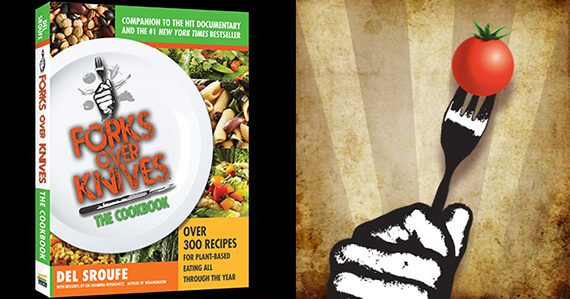
“Forks Over Knives – The Cookbook” Now Available
Just got mine in the mail and can't wait to whip up some goodies! Even if you haven't made the plunge to be vegan, or even vegetarian (my house surely has not), its a great way to get on the road to a plant based diet... or at least to getting more veggies on the dinner table.
Whats going on with the Farm Bill?
An article that gives a good look at the front lines of Food Bill issues.
http://www.sfgate.com/nation/article/Farm-bill-splits-produce-growers-food-activists-3641039.php
http://www.sfgate.com/nation/article/Farm-bill-splits-produce-growers-food-activists-3641039.php
What is Your Body Trying to Tell You?
Check out this Food Matters article on 9 symptoms you shouldn't ignore.

Click the link below to read the full Food Matters article!
Wednesday, July 18, 2012
Got Water?
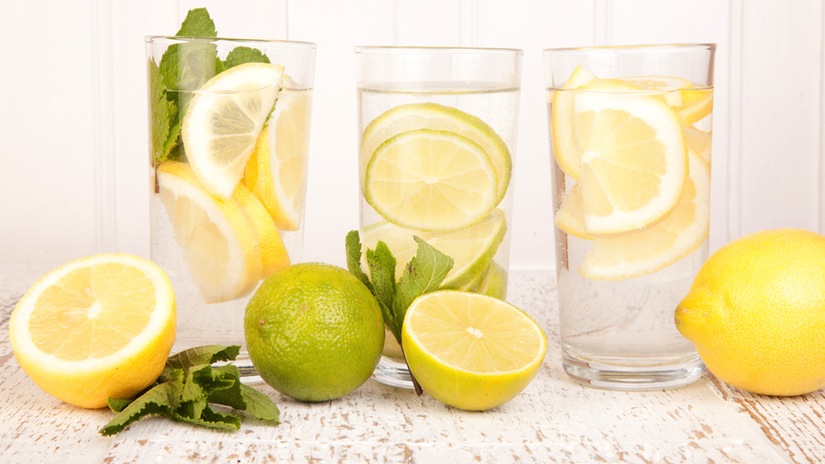
Check out the article from Food Matters to see if you suffer one of the symptoms of chronic dehydration. Those days you wake up sick or just can't seem to find the energy you need (you know those 'blah' days), it is easy to overlook the amount of water you consume as a possible reason/solution, but there are a lot of people not giving their bodies the amount of water it needs, and often its the best remedy (and always the cheapest)!
http://www.foodmatters.tv/articles-1/are-you-drinking-enough-water
Thursday, May 31, 2012
5 Steps to a Civil Pantry
There is a lot of buzz about food now thanks to foodies of
all shapes and sizes; locavores, vegetarians, nutritionists, organicists,
etc. and many places you might go to
find information on food/what to eat are plagued by biases based on one of
the various spokes that comprise the foodie wheel. Much like religious denominations, they’ve
forgotten we all have a similar goal in mind and instead bicker over their
differences. Lets face it though- it’s nearly impossible to perfectly encompass
all of our beliefs on what to eat into one pantry. It’s important to be
knowledgeable on all the propaganda from the foodie sects, but the real
question is how do we sort through this information? And as we are being torn
so many different ways, HOW can we keep a civil pantry?
1.
Rebudget
your monthly expenses. Your food budget should NOT be what you have left after
paying all those other ‘real’ bills/expenses. Food should be a major priority,
and the truth is while eating local and organic isn’t as expensive as the myths
have made you believe, it will sometimes cost a little more. But your health is
worth it. Here is the thing- you WILL spend the money eventually anyways but
you have two options for spending it- pay the farmer or pay the doctor. What
could be more important than the stuff you put IN your body everyday?
2.
Forks
over knives. Not just the movie, but in real life. Michael Pollan says
“Eat. Food. Not too much. Mostly plants.” Doesn’t get much more simple than
that. Am I concerned about the slaughter of innocent animals? Not really. Am I
concerned that diets higher in animal products leave me feeling ‘blah’ and have
been proven to cause higher rates of cancer? Certainly. What about the protein though? This message
was backed by for a number of years and by a large number of scientists- most
of who were hired by companies specializing in the production of animal
products. Truth is while eating a plant-based diet 8- 12% of your calories will
be from protein. And if you are looking for more protein rich foods, each some
legumes, wild rice, white corn and beans, etc. In most cases what is best for
our own health is also what is best for the environment, and this is not an
exception. Our mega meat addiction contributes almost 20% of the greenhouse
gases. Its estimated that if everyone in the US ate no meat or
cheese just 1 day a week it would be like not driving 91 billion miles – or
taking 7.6 million cars off the road. I'm not proposing we all run out and become vegetarians. I like a big juicy hamburger just as much as the next person. I'm only suggesting a cut back, and if a drastic cut back isn't in your cards try Meatless Mondays for a start.
3.
Buy local.
You won’t be able to find everything you need by shopping locally and you might
only be able to shop locally during certain seasons, but when you can, please
do. This is my favorite part about
maintaining a civil pantry because it is the responsibility that is in my
opinion, the most fun way to be more involved with your food. There are so many
different ways to buy local today. Join a CSA! CSA’s make eating local oh so
simple- sign up and pay the dues ($200-$300 for a four to six month CSA program
is average) and the farmer will provide you with a box full of produce about
every two weeks or so. Some farmers even have days when they invite their CSA
members to experience the farm themselves. Visit websites like localharvest.com
and find the nearest farm with a CSA program and most often its as easy as
sending an email to the farmer to get signed up. If you don’t feel like
committing to a CSA, why not go to the local farmers market? An outdoor market
is one of my favorite places on a Saturday morning, and there is little more
that can make me feel more secure than shaking the farmer’s hand that grew the
food I’m about to eat.
4.
Start a
garden. If you grow it, you’re more likely to eat it. I’ve always heard starting a
garden and inviting your children to be apart of the experience is a great way
to get kids to eat vegetables. Here is a secret though- it also works on
adults. People want to be apart of what they eat, even if they don’t realize
it. It’s a natural instinct within us to interact on a more basic level with
our food; we just have to find ways to tap into that instinct. And at the risk of
sounding too earthy…there is something special about putting your own
hard work and sweat into what your family eats. If land is not a luxury your home has, do not underestimate the power of a container garden.
5.
Eat
organic. The price of organic produce is still inflated a bit compared to
non-organic, but if its something you can afford, its worth the extra change to
enjoy food with less toxins. Less harmful for you, your family, and good ole’
Mother Nature. If you need help cutting corners and deciding when to buy organic check out the link below for a great article from Greenopolis.com.
Thursday, May 10, 2012
Choosing to be healthy
Check out Dr. Fuhrman's high-nutrient density diet. But to be fair this is not just Dr. Fuhrman's diet...This is the common sense diet. The necessary diet. The natural diet. The diet our bodies crave. The diet that will allow us to feel our maximum capacity of happiness, peace, energy, etc. Keep in mind 70% of the illnesses American's suffer from today are caused by everyday life choices- like our diet. We are choosing to be sick, so put down the knife and pick up the fork (or juicer), and make the choice to feel good.

Tuesday, May 1, 2012
Go Green on the Go: apps that help maintain a civil pantry
The one thing in my life I interact with as much as my garden (ok...probably more) is my phone. Being able to hold an endless amount of information, art, entertainment, etc in the palm of your hand is addicting sometimes, but we shouldn't be too hard on ourselves. We can wield this power for good. I've found some great whole-living, green apps that will help maintain your family's civil pantry.
1. Fooducate: Scan the barcode on almost any food product and get a 'grade' based on ingredients, calories, etc. It gives accurate warnings of toxic ingredients and gives detailed descriptions of many of those ingredients, including why we find them in our foods, the affects they have on our body, and how we might be able to avoid them. It of course gives basic information such as calories and tips for dieters. My favorite feature of the app is the alternatives tab, which provides a substantial list of alternatives to choose from. Great app with a fun and easy to use interface.
2. Locavore: Maps out farms and farmer's markets nearby. You can search by zipcode or use your phone's GPS to locate local food sources close to your current position. Eating locally is a crucial part of keeping a civil pantry in your own home and Locavore is where its at.
3. Garden Guide: If you like to play in the dirt as much as me, you MUST get this app. Its the virtual version of your favorite gardening resource, with all the excitement that comes along with finding Urban Farm in the mailbox. It has detailed crop descriptions (that include plating and harvesting instructions) and tips on pest control, season extension, watering, etc. If you can find it online, in a book, or in a magazine...you can find it on Garden Guide. If you are a gardener with limited space, such as myself, check out Garden Squared as well. Its a great app that helps make sure you are getting the most out of your square foot or container gardens.
4. GoodGuide: Simply scan a barcode to make sure the product is sustainable healthy, and safe. This app includes awesome detailed ratings for the health, environment, and social responsibility of more than 70,000 products and companies. A super informative app!
5. Seafood Watch: The Monterey Bay Aquarium developed this resource to educate consumers about sustainable seafood. Their recommendations indicate which seafood items are "Best Choices," "Good Alternatives," and which ones you should "Avoid."
1. Fooducate: Scan the barcode on almost any food product and get a 'grade' based on ingredients, calories, etc. It gives accurate warnings of toxic ingredients and gives detailed descriptions of many of those ingredients, including why we find them in our foods, the affects they have on our body, and how we might be able to avoid them. It of course gives basic information such as calories and tips for dieters. My favorite feature of the app is the alternatives tab, which provides a substantial list of alternatives to choose from. Great app with a fun and easy to use interface.
2. Locavore: Maps out farms and farmer's markets nearby. You can search by zipcode or use your phone's GPS to locate local food sources close to your current position. Eating locally is a crucial part of keeping a civil pantry in your own home and Locavore is where its at.
3. Garden Guide: If you like to play in the dirt as much as me, you MUST get this app. Its the virtual version of your favorite gardening resource, with all the excitement that comes along with finding Urban Farm in the mailbox. It has detailed crop descriptions (that include plating and harvesting instructions) and tips on pest control, season extension, watering, etc. If you can find it online, in a book, or in a magazine...you can find it on Garden Guide. If you are a gardener with limited space, such as myself, check out Garden Squared as well. Its a great app that helps make sure you are getting the most out of your square foot or container gardens.
4. GoodGuide: Simply scan a barcode to make sure the product is sustainable healthy, and safe. This app includes awesome detailed ratings for the health, environment, and social responsibility of more than 70,000 products and companies. A super informative app!
5. Seafood Watch: The Monterey Bay Aquarium developed this resource to educate consumers about sustainable seafood. Their recommendations indicate which seafood items are "Best Choices," "Good Alternatives," and which ones you should "Avoid."
Monday, April 30, 2012
They're coming...
 |
| Bugs don't always wait for fruit to ripen. Treat your plants early with organic insecticidal soap. |
Thursday, April 19, 2012
Diving into the food waste problem
I highly recommend you take a DIVE! into this Chicago Tribune article...
Diving into the food waste problem

Diving into the food waste problem
Kale Chips Recipe

Kale Chips!
1. Preheat oven to 350 degrees
2. Cut leaf away from thick stem.
This is easiest with a pair of
kitchen shears
3. Cut leaf into bite size pieces (optional)
4. Brush LIGHTLY with
extra virgin olive oil
(you can also use salt
here, but I recommend trying
kale on its own first-its
packed with natural flavor)
5. Bake at 350 for 9-13 minutes.
Edges should start browning.
It might look like rabbit food, but encourage your family to try one! They won't be able to stop eating, and why should they? Kale is packed full of nutrients, (just one of the many yummy 'super-foods')- much better than the LAYS they normally reach for.
Sunday, April 15, 2012
GARDEN UPDATE: A little expansion...
 | |
| We've started some new projects! |
 |
| Cucumber: don't forget these guys need plenty of support. A tomato ring works fine, and its cheap! |
 |
| Plant starter plants 2/3 down in the soil to give them strength, especially your tomatoes! |
 |
| The squash will soon be moved to the ground so the vines can grow outside the pots. |
 |
| Watermelon and cantaloupe beds. 5x2 and 10" deep. Always get pressure treated wood to avoid rot. |
 |
| Chicken wire to keep the vermin out...and a house cat or two |
 |
| A section of the happy family! |
Give Your Garden Some Reinforcements...

Trying to keep my veggies extra healthy and safe, and of course- still organic. There are a lot of products out there, so do your research! These are just two of the tools in my own gardening belt!
Published with Blogger-droid v2.0.4
McDonaldization: A Sociological Glimpse at the Rationalization of Our Food Industry
Society has changed a great deal since our move from a pre-industrial/pre-capitalistic society to a capitalistic industrial economy that is moving further away from local economies to one that is global. The way in which we live day-to-day and the ways in which our economy and politics operate would be unrecognizable to someone who lived two hundred years ago. Technology has changed the way we travel, the way we work, the way we communicate, the way we spend our leisure time, the way we consume, and all of these technologies have made a tremendous impact on our natural environment. Knowing our society has impacted the natural world in such a colossal way, it should be no surprise this new way of living has also affected our bodies, because after all, our bodies are a part of a larger ecosystem that includes the natural world in which we live. And since we are so greatly impacted by the ecosystem we live in, should it not be common knowledge that what affects us even more than the environment around us, is what we choose to put inside our bodies. To understand the change in our health, it is imperative to understand the change in how our food in produced and consumed.
There are many reasons for the change in diet among Americans. Modern society has reached the peak of what Max Weber saw as the rationalization of society and what George Ritzer later called the McDonaldization of society. That is characterized by a focus on efficiency, quantification, predictability, and control through the process of replacing humans with nonhuman technology. Weber noticed a shift from substantive rationality to a more formal rationality that put profit over product and morals, and he noticed this long before we reached the level of “rationalization” in which we currently operate. This idea of formal rationality pushes us to decide what we eat not on substance or quality, but what is cheapest and fastest, being that those are the “rational” things to consider when making such a choice. This is how the fast food industry has grown to be such a powerful force in today’s economy and social organization. Producers have perfected the art of one key item and can make that item cheaply, uniformly, and quickly, thus allowing a greater profit. This process of uni-product sellers is not something that has been restricted to restaurants though; our agricultural system has become this way as well. Policies within the Farm Bill encourage overproduction of a certain handful of crops, namely corn, and when a surplus occurs (such as the seemingly permanent surplus America is now dealing with in corn) producers must find use for it. And so in true American fashion, producers put the surplus to use in a manner which is cheapest to them and makes for bigger profit in the supermarkets. The selling of just high fructose corn syrup might not be that lucrative in small increments; it by no means sells at a high price. When producers can market a product like high fructose corn syrup so well that it gets placed in almost every item we see today in the grocery store, it does however make profit due to the sheer volume being sold.
Michael Pollan blames a lack of a stable culture of food for the state of America’s poor nutrition and diet. He argues that this collapse of nutrition “would never have happened in a culture in possession of deeply rooted traditions surrounding food and eating". When many American’s still have yet to acknowledge there is a problem with the fact that we “eat a fifth of [our] meals in cars [and] feed fully a third of [our] children at a fast-food outlet everyday”, it is hard to even begin to propose solutions to such problems. Therefore, before we begin to fix our national diet, we must first fix our mentality and acknowledge the McDonaldization of our food as problematic. We must start to reconnect with our food and undo what Brewster Kneen (a Candadian agriculture economist) calls distancing. Distancing, according to Kneen, is “the process that separates people from the sources of their food and replaces diversified and sustainable food systems with a globalized, commoditized system”. Ideas like distancing and McDonaldization are all supported further by our own consumption patterns, local government decision makers, and larger pieces of government legislation like the Farm Bill.
There are many reasons for the change in diet among Americans. Modern society has reached the peak of what Max Weber saw as the rationalization of society and what George Ritzer later called the McDonaldization of society. That is characterized by a focus on efficiency, quantification, predictability, and control through the process of replacing humans with nonhuman technology. Weber noticed a shift from substantive rationality to a more formal rationality that put profit over product and morals, and he noticed this long before we reached the level of “rationalization” in which we currently operate. This idea of formal rationality pushes us to decide what we eat not on substance or quality, but what is cheapest and fastest, being that those are the “rational” things to consider when making such a choice. This is how the fast food industry has grown to be such a powerful force in today’s economy and social organization. Producers have perfected the art of one key item and can make that item cheaply, uniformly, and quickly, thus allowing a greater profit. This process of uni-product sellers is not something that has been restricted to restaurants though; our agricultural system has become this way as well. Policies within the Farm Bill encourage overproduction of a certain handful of crops, namely corn, and when a surplus occurs (such as the seemingly permanent surplus America is now dealing with in corn) producers must find use for it. And so in true American fashion, producers put the surplus to use in a manner which is cheapest to them and makes for bigger profit in the supermarkets. The selling of just high fructose corn syrup might not be that lucrative in small increments; it by no means sells at a high price. When producers can market a product like high fructose corn syrup so well that it gets placed in almost every item we see today in the grocery store, it does however make profit due to the sheer volume being sold.
Michael Pollan blames a lack of a stable culture of food for the state of America’s poor nutrition and diet. He argues that this collapse of nutrition “would never have happened in a culture in possession of deeply rooted traditions surrounding food and eating". When many American’s still have yet to acknowledge there is a problem with the fact that we “eat a fifth of [our] meals in cars [and] feed fully a third of [our] children at a fast-food outlet everyday”, it is hard to even begin to propose solutions to such problems. Therefore, before we begin to fix our national diet, we must first fix our mentality and acknowledge the McDonaldization of our food as problematic. We must start to reconnect with our food and undo what Brewster Kneen (a Candadian agriculture economist) calls distancing. Distancing, according to Kneen, is “the process that separates people from the sources of their food and replaces diversified and sustainable food systems with a globalized, commoditized system”. Ideas like distancing and McDonaldization are all supported further by our own consumption patterns, local government decision makers, and larger pieces of government legislation like the Farm Bill.
Saturday, April 14, 2012
Catching up to the Local Food Revolution | Common Dreams
Check out this awesome article by Bill Wenzel and keep buying local!
Catching up to the Local Food Revolution | Common Dreams
Catching up to the Local Food Revolution | Common Dreams
Monday, April 9, 2012
Farm Bill 101- Know the Basics
Despite America’s free market economy and its valuing of free enterprise, there exists a piece of legislation that reaches with sticky government fingers from the offices of big government, right into the homes of everyday Americans. It’s currently powering one of the biggest industries in the world, and yet still determines something as local as what shows up on our children’s lunch trays.
The Farm Bill originally started in the early to mid 1900’s, during the time of the Great Depression. Its purpose at that time was to create stability for farmers and their families, during a period when the farming industry was growing to become an extremely unprofitable and unstable way of life. Throughout the course of American industrialization, “increased global trade, the call for less government spending, the concentration of distribution and processing capabilities, and low commodity prices took their toll on the farm sector and rural communities.” (Daniel Imhoff, Food Fight). Large corporations took control of the agricultural world and terms like “agribusinesses” and “mega-farms” were needed to describe the new type of economy that existed around agriculture. The money once meant for America’s everyday farmers and their families now only benefited two out of five farmers, with the richest five percent receiving on average $470,000 each.
Because of the overhead prices that are required to start farming in modern society, and the annual costs to keep a farm running, farmers make little money without off farm jobs and government subsidies. When the Farm Bill was passed in 1996, most American’s thought it would affect little beyond the people that farmed. But the farm bill has a farther reaching impact than first anticipated. The farm bill started to pay farmers to produce only certain crops. When you look at the Farm Bill’s numerous sections, you will notice a substantial section titled “Commodity programs”. This section addresses what commodity crops the government will pay farmers to produce, and produce in excess. Some of the crops covered in this section are corn, cotton, soybeans, sugar, and wheat. Foods such as corn and soybeans are then turned into the cheapest fats, oils, and sugars on the market. Food engineers started using the surplus to create harmful additives like hydrogenated oils and high fructose corn syrup. They feed some of the surplus to the cows in beef plants, causing the cows to acquire new diseases and illness because of the unnatural diet. Imhoff states it most simply when he says, “…the Farm Bill determines what crops the government will support- and, in turn, which kinds of foods will be plentiful and cheap” (Daniel Imhoff, Food Fight). It rewards farmers for producing crops that are government supported, giving little incentive to produce crops that are not government supported—like fruits and vegetables. In the industrial agriculture’s quest to profit off consumers, corporations have created a system in which the food that is cheapest is also the food that is the worst for us nutritionally.
The graph below shows the change in food prices in the United States between 1985- 2000. Foods such as dairy, red meats, sugar and sweets, and fats and oils all decreased in price from five to fifteen percent between 1985 and 2000. Soft drinks decreased an astounding twenty three percent in that time period, while the costs of fresh fruits and vegetables rose thirty eight percent in price during that same time. We’ve made the highest calorie foods the most accessible, decreasing the opportunities we have to choose the healthier alternatives that help avoid the serious risks involved with a lifestyle full of high sugar/high calorie foods. Americans are in danger, and it is obvious the risks are much greater within low-income families.
It is crucial we recognize the Farm Bill is a symptom of the lack of food culture at work in America.
The Farm Bill originally started in the early to mid 1900’s, during the time of the Great Depression. Its purpose at that time was to create stability for farmers and their families, during a period when the farming industry was growing to become an extremely unprofitable and unstable way of life. Throughout the course of American industrialization, “increased global trade, the call for less government spending, the concentration of distribution and processing capabilities, and low commodity prices took their toll on the farm sector and rural communities.” (Daniel Imhoff, Food Fight). Large corporations took control of the agricultural world and terms like “agribusinesses” and “mega-farms” were needed to describe the new type of economy that existed around agriculture. The money once meant for America’s everyday farmers and their families now only benefited two out of five farmers, with the richest five percent receiving on average $470,000 each.
Because of the overhead prices that are required to start farming in modern society, and the annual costs to keep a farm running, farmers make little money without off farm jobs and government subsidies. When the Farm Bill was passed in 1996, most American’s thought it would affect little beyond the people that farmed. But the farm bill has a farther reaching impact than first anticipated. The farm bill started to pay farmers to produce only certain crops. When you look at the Farm Bill’s numerous sections, you will notice a substantial section titled “Commodity programs”. This section addresses what commodity crops the government will pay farmers to produce, and produce in excess. Some of the crops covered in this section are corn, cotton, soybeans, sugar, and wheat. Foods such as corn and soybeans are then turned into the cheapest fats, oils, and sugars on the market. Food engineers started using the surplus to create harmful additives like hydrogenated oils and high fructose corn syrup. They feed some of the surplus to the cows in beef plants, causing the cows to acquire new diseases and illness because of the unnatural diet. Imhoff states it most simply when he says, “…the Farm Bill determines what crops the government will support- and, in turn, which kinds of foods will be plentiful and cheap” (Daniel Imhoff, Food Fight). It rewards farmers for producing crops that are government supported, giving little incentive to produce crops that are not government supported—like fruits and vegetables. In the industrial agriculture’s quest to profit off consumers, corporations have created a system in which the food that is cheapest is also the food that is the worst for us nutritionally.
The graph below shows the change in food prices in the United States between 1985- 2000. Foods such as dairy, red meats, sugar and sweets, and fats and oils all decreased in price from five to fifteen percent between 1985 and 2000. Soft drinks decreased an astounding twenty three percent in that time period, while the costs of fresh fruits and vegetables rose thirty eight percent in price during that same time. We’ve made the highest calorie foods the most accessible, decreasing the opportunities we have to choose the healthier alternatives that help avoid the serious risks involved with a lifestyle full of high sugar/high calorie foods. Americans are in danger, and it is obvious the risks are much greater within low-income families.
 |
| Graph from Daniel Imhoff's Food Fight |
It is crucial we recognize the Farm Bill is a symptom of the lack of food culture at work in America.
Subscribe to:
Posts (Atom)